
FUE hair transplantation. A considered choice.
FUE moves individual follicular grafts from a donor area of the scalp into areas of thinning. Growth develops gradually; the initial transplant appearance is not the final result.
We coordinate enquiries with selected providers. A treating clinician assesses suitability and explains your clinical plan.
- First enquiry
- Free
- Catalogue
- 1 reference
- Clinical plan
- Individual assessment
Understand the process. Plan for gradual growth.
- 1
FUE
Individual follicular grafts are removed from the donor scalp and transferred to thinning areas. Tiny donor scars can remain.
Redistributing existing hair.
A transplant moves grafts rather than creating an unlimited supply of new follicles. Donor hair, intended coverage and ongoing hair loss matter when planning. FUE removes individual grafts; FUT uses a strip of scalp. Our current catalogue reference is FUE.
Hair loss, coverage & the donor area
The current catalogue contains FUE transplantation. A plan needs to explain the donor area and intended coverage, rather than relying on a graft number or reference photograph alone.
Describe your priorities and the limits you would be comfortable with. An illustration explains a concept; it cannot predict an individual result.
What an assessment considers.
Discuss the pattern and history of hair loss, previous treatments, donor-area assessment and expectations for future hair loss.
The treating clinician reviews your health, anatomy, goals and alternatives, including no surgery, before explaining whether an operation is appropriate. This page does not determine eligibility or select a technique for you.
FUE hair transplantation techniques, clearly explained.
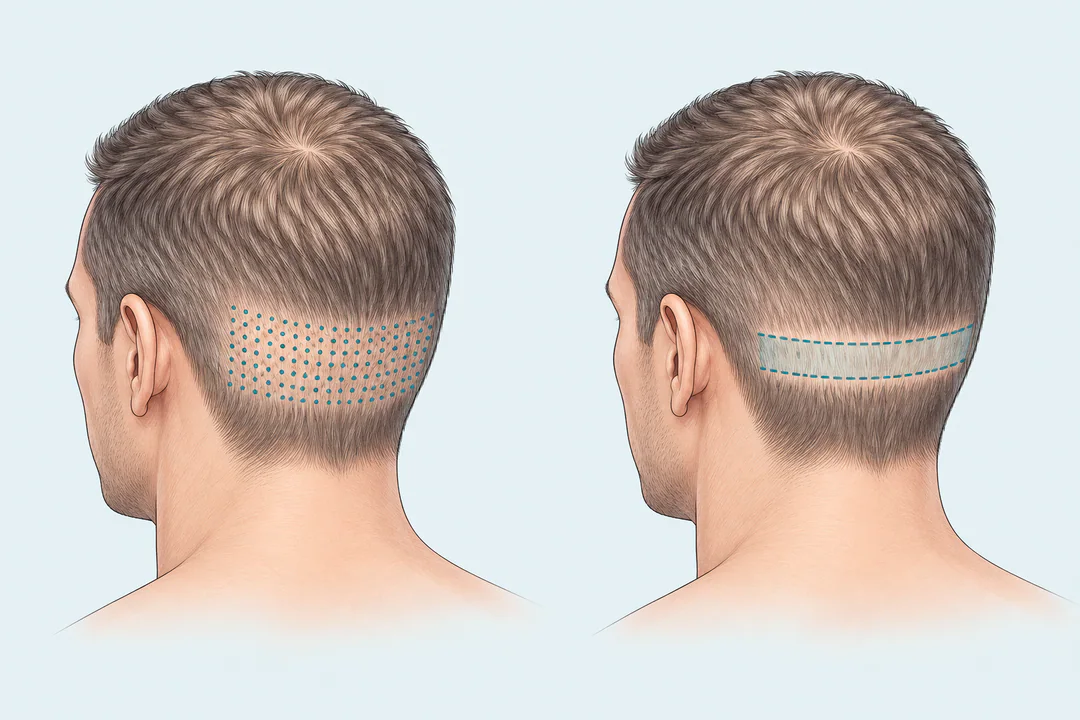
Donor collection methods shown for comparison. Our current catalogue lists FUE; FUT is not a confirmed service offering.
FUE
FUT: a comparison
The treating provider confirms the technique available and appropriate for your circumstances.
The operation, step by step.
- 01
Hairline and coverage plan
The surgeon agrees the donor and receiving areas.
- 02
Anaesthesia
Local anaesthesia, sometimes with sedation, is used.
- 03
Graft collection
Individual follicular grafts are removed from the donor area.
- 04
Placement
Grafts are placed into small openings in the receiving scalp.
- 05
Graft care
The team explains protection, washing and follow-up arrangements.
FUE hair transplantation: recovery, stage by stage.
These are general milestones, not a fixed schedule. Combined or revision procedures can differ. Follow the treating team’s instructions and confirm follow-up and fitness to fly before booking travel.
- First two weeks
The grafts need protection while healing begins.
- Following weeks
Transplanted hairs may shed.
- Around month 4
New growth may begin to appear.
- Months 10–18
The fuller result may become apparent; timing varies.
Preparation & risks. Know what to discuss.
Prepare for your consultation
- Share your goals, relevant health history, allergies, medicines, supplements and previous procedures with the clinician.
- Ask for the provider’s instructions on tests, smoking, medication and fasting. Do not change medication based on this page.
- Confirm who performs the operation, where it takes place and who to contact after discharge.
- Plan assistance, follow-up and flexible travel around the confirmed clinical schedule.
Risks to discuss
Discuss bleeding, infection, scarring, graft failure and continued hair loss around the transplant.
This is not an exhaustive list. The clinician should explain individual risks and alternatives before consent. Seek urgent medical help for severe or rapidly worsening symptoms, breathing difficulty or heavy bleeding.
Prices & what is included.
References from the supplied price list, not a personalised or all-inclusive quote. Final procedure, materials, anaesthesia, facility, follow-up and travel inclusions must be confirmed in writing. Add-ons are listed separately below.
USD is shown first for comparison, with original CNY references beneath converted amounts. These are not live quotes or a guarantee of availability.
| Procedure | Reference price |
|---|---|
| FUE hair transplantationChina reference range from our existing catalogue. Graft count, treatment scope and inclusions need confirmation. | USD 3,000–5,000 |
For aesthetic care, MediBridge coordination is included in the confirmed package, with no separate MediBridge service fee. A physician consultation is separately arranged and quoted.
Request a written breakdown of the procedure, materials, anaesthesia, facility, follow-up and any hotel, transfer or language support. Confirm exclusions and charges for additional care.
Before you decide.
Further patient information: NHS: hair transplant (opens in a new tab)
Educational references checked 29 October 2026. These sources do not endorse MediBridge or establish the services offered by a particular provider.
From your first question to practical arrangements.
- 01
Start a free enquiry
Tell our coordination team what you are exploring. No complete file is needed to begin.
- 02
Arrange a clinical consultation
Confirm the clinician, consultation format and any separate fee. Ask how to share records securely.
- 03
Review the proposal
Check the operation, provider, total price, inclusions and terms before deciding.
- 04
Confirm travel & follow-up
Agree appointments and practical support around the treating provider’s plan.