
Eyelid & eye-area surgery. A considered choice.
Eyelid surgery can change excess upper-lid skin or the appearance of lower-lid bags. Crease creation, brow lifting and corner procedures are different choices within eye-area surgery.
We coordinate enquiries with selected providers. A treating clinician assesses suitability and explains your clinical plan.
- First enquiry
- Free
- Catalogue
- 12 references
- Clinical plan
- Individual assessment
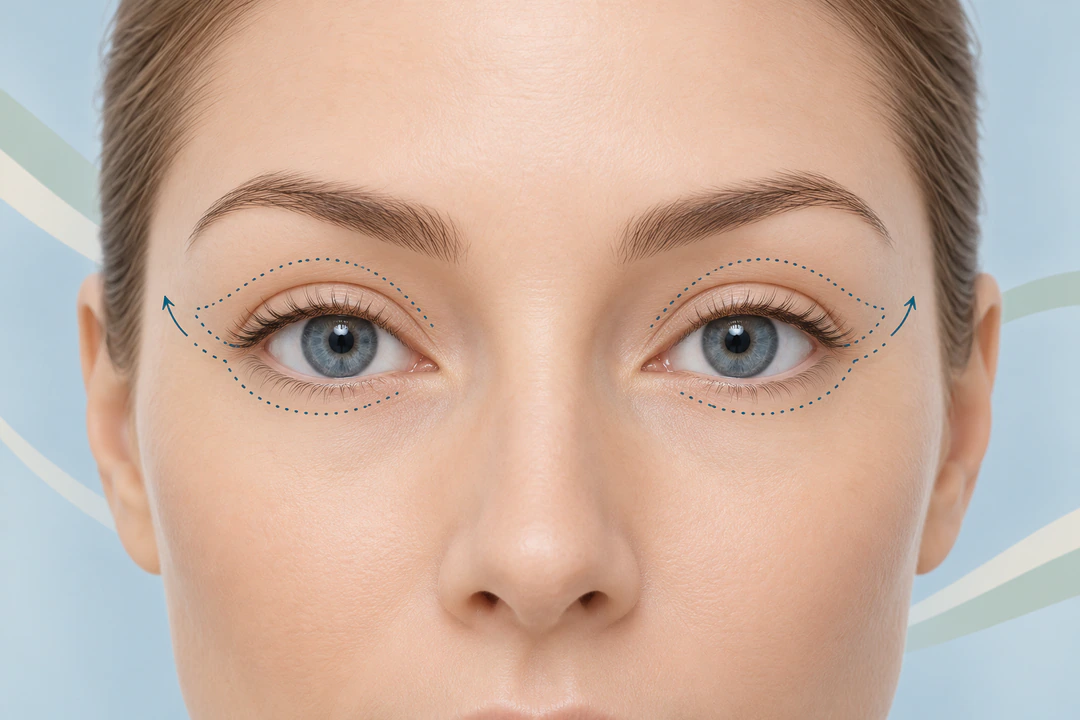
What eyelid surgery changes.
Upper and lower eyelid surgery work on different structures. An upper-lid operation may adjust skin and underlying tissue along the lid crease. A lower-lid operation may redistribute or remove protruding fat, with skin treatment where appropriate. Neither automatically corrects brow position or every cause of dark circles.
Crease, bags or brow position?
The eyelid crease, lower-lid bags and brow position are different concerns. The current list includes procedures for more than one of these areas; one operation should not be assumed to address them all.
Describe your priorities and the limits you would be comfortable with. An illustration explains a concept; it cannot predict an individual result.
What an assessment considers.
Discuss eye symptoms, eyelid function, previous procedures and whether your concern is the upper lid, lower lid or brow.
The treating clinician reviews your health, anatomy, goals and alternatives, including no surgery, before explaining whether an operation is appropriate. This page does not determine eligibility or select a technique for you.
Eyelid & eye-area surgery techniques, clearly explained.
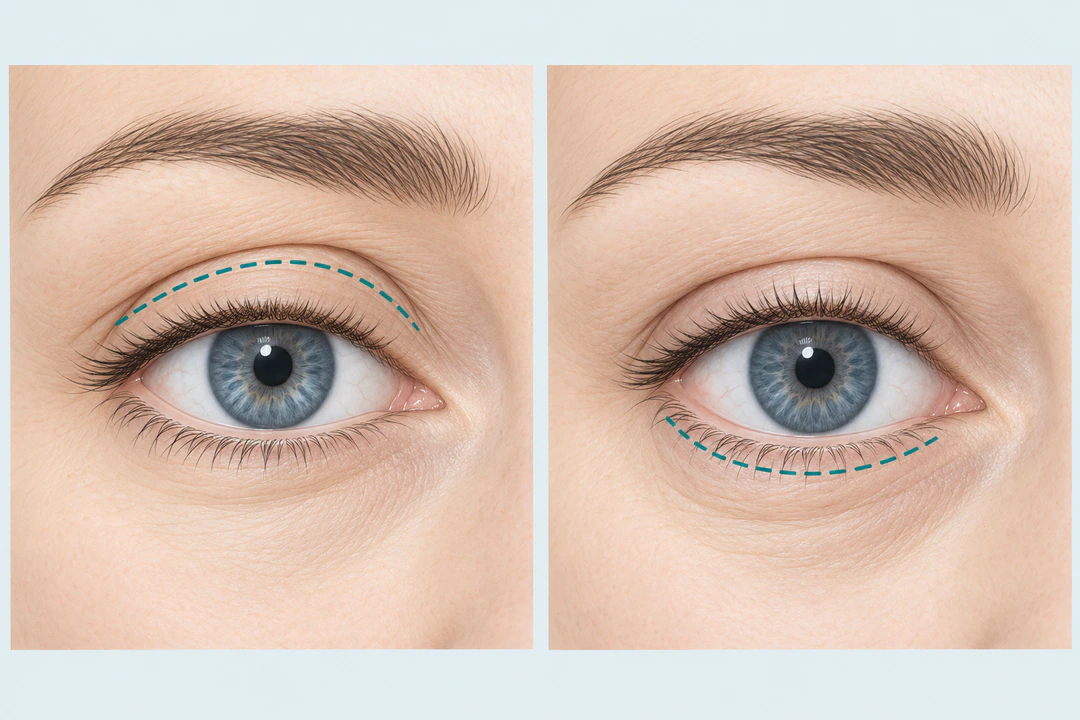
Schematic access locations. The lower-lid illustration shows an external approach; an internal approach is another option explained below.
Upper eyelid surgery
Lower eyelid surgery
Brow and corner procedures
The treating provider confirms the technique available and appropriate for your circumstances.
The operation, step by step.
- 01
Anaesthesia
Local anaesthesia, sometimes with sedation, or general anaesthesia may be used according to the operation.
- 02
Incision placement
An upper-lid incision follows the crease. Lower-lid access can be beneath the lashes or inside the eyelid.
- 03
Skin and fat adjustment
The surgeon adjusts the planned tissue. Fat may be repositioned rather than simply removed; skin removal depends on the approach.
- 04
Support and closure
Where needed, lower-lid support is addressed before the incisions are closed.
- 05
Early protection
Dressings or strips may be applied. The team provides instructions for eye care and the first review.
Eyelid & eye-area surgery: recovery, stage by stage.
These are general milestones, not a fixed schedule. Combined or revision procedures can differ. Follow the treating team’s instructions and confirm follow-up and fitness to fly before booking travel.
- Days 1–3
Swelling, bruising, watering or irritation may be noticeable. Temporary blurred vision can occur; unexpected or worsening vision changes need prompt assessment.
- Around week 1
An early review checks healing. Strips or non-dissolving stitches may be removed according to the provider’s plan.
- Around week 2
Many people allow about two weeks away from work. Comfort, appearance and the demands of the job affect timing.
- Following weeks
Bruising and redness may still be visible. Activities and eye care follow the treating team’s instructions.
- Following months
Scars and the appearance continue to settle; persistent symptoms or lid-position concerns need review.
Preparation & risks. Know what to discuss.
Prepare for your consultation
- Share your goals, relevant health history, allergies, medicines, supplements and previous procedures with the clinician.
- Ask for the provider’s instructions on tests, smoking, medication and fasting. Do not change medication based on this page.
- Confirm who performs the operation, where it takes place and who to contact after discharge.
- Plan assistance, follow-up and flexible travel around the confirmed clinical schedule.
Risks to discuss
Discuss dry eyes, difficulty closing the eyes, changes in lid position, bleeding, infection, scarring and possible revision. Vision changes, including rare loss of vision, require specific discussion.
This is not an exhaustive list. The clinician should explain individual risks and alternatives before consent. Seek urgent medical help for severe or rapidly worsening symptoms, breathing difficulty or heavy bleeding.
Prices & what is included.
References from the supplied price list, not a personalised or all-inclusive quote. Final procedure, materials, anaesthesia, facility, follow-up and travel inclusions must be confirmed in writing. Add-ons are listed separately below.
USD is shown first for comparison, with original CNY references beneath converted amounts. These are not live quotes or a guarantee of availability.
| Procedure | Reference price |
|---|---|
| Comprehensive eyelid surgery — small package | ≈ USD 2,504Original: CNY 16,800 |
| Comprehensive eyelid surgery — extended package | ≈ USD 3,249Original: CNY 21,800 |
| Lower eyelid surgery — internal approach | ≈ USD 1,311Original: CNY 8,800 |
| Lower eyelid surgery with fat repositioning | ≈ USD 1,759Original: CNY 11,800 |
| Brow augmentation / contouring | ≈ USD 3,696Original: CNY 24,800 |
| Brow lift | ≈ USD 1,311Original: CNY 8,800 |
| Inner eye-corner revision | ≈ USD 1,311Original: CNY 8,800 |
| Incisional double-eyelid surgery | ≈ USD 1,311Original: CNY 8,800 |
| Double-eyelid revision | ≈ USD 715Original: CNY 4,800 |
| Lower eyelid / individual eye-corner procedureThis reference price is on hold. Request confirmation before making a decision. | Price pending confirmation |
| Non-incisional double-eyelid surgery | ≈ USD 742Original: CNY 4,980 |
| Fat grafting to the eye socket | ≈ USD 715Original: CNY 4,800 |
This is the current catalogue reference, not a personalised quote.
For aesthetic care, MediBridge coordination is included in the confirmed package, with no separate MediBridge service fee. A physician consultation is separately arranged and quoted.
Request a written breakdown of the procedure, materials, anaesthesia, facility, follow-up and any hotel, transfer or language support. Confirm exclusions and charges for additional care.
Before you decide.
Further patient information: ASPS: eyelid surgery (opens in a new tab) · Techniques (opens in a new tab) · Recovery (opens in a new tab) · Risks (opens in a new tab) · NHS: procedure and recovery (opens in a new tab)
Educational references checked 29 October 2026. These sources do not endorse MediBridge or establish the services offered by a particular provider.
From your first question to practical arrangements.
- 01
Start a free enquiry
Tell our coordination team what you are exploring. No complete file is needed to begin.
- 02
Arrange a clinical consultation
Confirm the clinician, consultation format and any separate fee. Ask how to share records securely.
- 03
Review the proposal
Check the operation, provider, total price, inclusions and terms before deciding.
- 04
Confirm travel & follow-up
Agree appointments and practical support around the treating provider’s plan.